
A genuinely useful best cloud provider comparison needs to go beyond feature lists and market share statistics, since the right choice depends heavily on your specific technical needs and existing tools. This guide breaks down AWS, Azure, and Google Cloud with current pricing details, real free-tier limits, and the practical differences that actually matter when choosing where to host your business’s infrastructure.
Where Each Provider Actually Stands Right Now
Any honest best cloud provider comparison should start with real numbers, not just reputation. As of Q2 2026, AWS holds roughly 31% of the global cloud infrastructure market, Azure sits around 24%, and Google Cloud is at about 12%, according to Synergy Research Group. AWS is still the largest by revenue, but the growth rates tell a different story: Google Cloud grew 63% year-over-year in this period, faster than either competitor, largely driven by AI workload demand, while AWS grew a comparatively slower 18–28% depending on the quarter measured.
What this actually means for you: AWS’s size gives it the deepest talent pool and the most third-party tutorials/support if something goes wrong. Google Cloud’s rapid growth is concentrated specifically in AI/ML and data-heavy workloads, which lines up with where it’s traditionally strongest anyway.
Why Isn’t There One Universal “Best Cloud Provider?
Because each of the three major providers has genuine strengths that fit different situations better than others. A best cloud provider comparison that declares one winner for everyone is oversimplifying a decision that should really be based on your existing tools, technical expertise, and specific workload requirements.
What Is AWS Best Known For?
Amazon Web Services is the largest and most established cloud provider, with the broadest catalogue of services over 200 at last count and the largest community of developers already familiar with its platform. Its serverless stack (Lambda + DynamoDB + API Gateway) is widely considered the most mature combination available from any single provider.
Best for: Businesses wanting the widest range of available services and the deepest talent pool to hire from.
What Is Azure Best Known For?
Microsoft Azure integrates especially well with other Microsoft products, Windows Server, Office 365, and Active Directory, making it a natural fit for businesses already deeply invested in the Microsoft ecosystem. Azure Hybrid Benefit specifically lets businesses reuse existing on-premises Windows Server and SQL Server licenses toward cloud costs, which is a genuine, quantifiable saving that AWS and GCP don’t directly replicate.
Best for: Businesses already using Microsoft products extensively, or those needing strong enterprise-grade compliance and hybrid cloud options.
What Is Google Cloud Best Known For?
Google Cloud is recognised for strong data analytics and machine learning capabilities, built on Google’s own internal AI infrastructure. Its BigQuery data warehouse and Vertex AI platform are frequently cited as best-in-class for teams doing heavy data science work, and it’s currently the only major provider offering a permanent free always-on virtual machine (the e2-micro instance).
Best for: Businesses with data-heavy or AI-focused workloads who want strong, purpose-built tools in those specific areas.
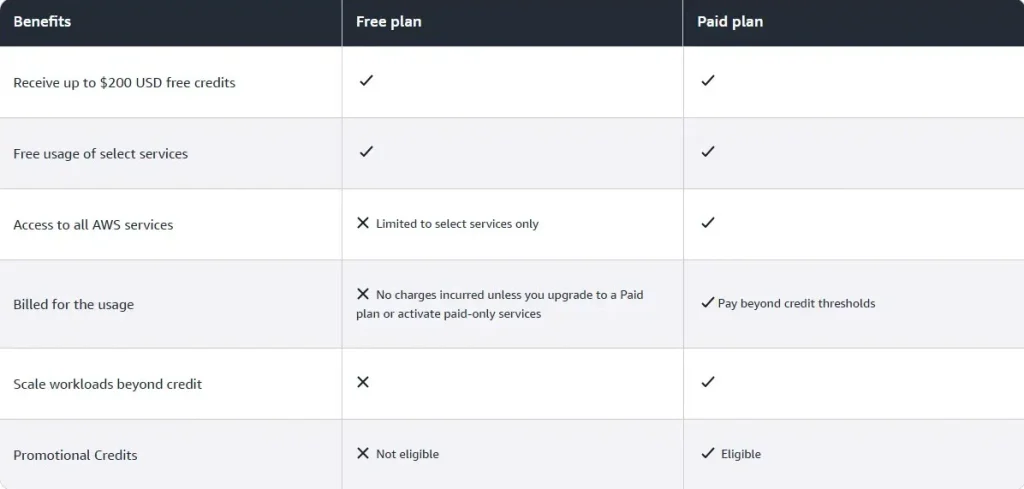
How Do the Free Tiers Actually Compare?
This is where a real best cloud provider comparison earns its keep; the checkable differences show up clearly here:
| AWS | Azure | Google Cloud | |
|---|---|---|---|
| New account credit | No upfront credit; usage-based free tier | $200 credit, must be used within 30 days | $300 credit, valid for 90 days |
| Always-free compute | 750 hrs/month of t2.micro for 12 months only | 750 hrs/month of B1S VM for 12 months only | One e2-micro instance, free permanently |
| Free database | DynamoDB: 25GB storage, always free | Cosmos DB: 1000 RU/s + 25GB, always free | Firestore: 1GB storage, always free |
| Notable always-free extras | Lambda: 1 million requests/month | Azure Functions: 1 million executions/month | Cloud Run: 2 million requests/month |
Google Cloud’s permanent free VM makes it the most forgiving option if you’re testing something long-term without a clear budget yet. AWS and Azure’s free tiers are genuinely generous for the first 12 months but do expect a switch to paid billing after that unless you stay within their specific “always free” service list.
(Figures above reflect published rates as of September 2026; always confirm current numbers on each provider’s official pricing page before budgeting, since cloud pricing changes frequently.)
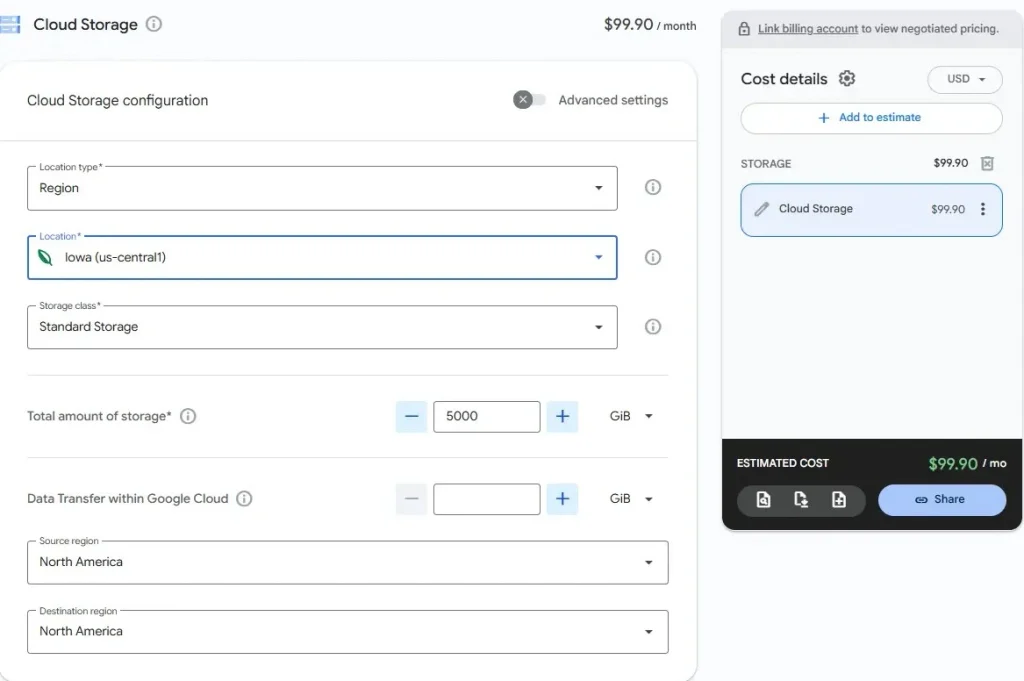
How Do They Compare on Discount and Commitment Options?
All three offer a way to pay less in exchange for committing to usage in advance, but the mechanics differ:
- AWS offers Savings Plans (flexible commitment across EC2, Lambda, and Fargate) and Reserved Instances, both capable of up to 72% off on-demand rates for 1- or 3-year commitments.
- Azure offers Reserved VM Instances plus the Hybrid Benefit mentioned earlier genuinely valuable if you already own Windows Server or SQL Server licenses.
- Google Cloud automatically applies Sustained Use Discounts (up to 30% off) without requiring any upfront commitment at all, on top of optional Committed Use Discounts of up to 57% for 1- or 3-year terms.
GCP’s automatic discount is worth calling out specifically; it’s the only one of the three that rewards steady usage without you having to plan and lock in a commitment ahead of time.
How Do They Compare on Ease of Use?
Ease of use is subjective, but it’s a real factor in any best cloud provider comparison. It varies by specific service and by the technical background of the person using it. Google Cloud’s console is generally considered the most approachable for common tasks, while AWS’s sheer breadth of options can feel more complex for beginners despite offering more overall flexibility. Azure tends to feel most familiar to teams already comfortable navigating other Microsoft enterprise tools.
Does Existing Technology Matter for This Decision?
Significantly. A best cloud provider comparison should weigh your current technology stack heavily, since a business already using Microsoft’s ecosystem extensively will likely find Azure integrates more smoothly, while a business with a data science or AI-focused team may find Google Cloud’s tools better suited to their existing workflows.
Which Provider Is Easiest for a Small Business to Start With?
All three offer free tiers suitable for testing and small-scale use, but if you genuinely don’t know yet, Google Cloud’s permanent free e2-micro instance means you can leave a small project running indefinitely without a countdown clock, which removes one source of pressure while you’re still evaluating.
Can a Business Use More Than One Best Cloud Provider Option?
Yes, and many larger businesses do exactly this: a multi-cloud approach, using different providers for different workloads based on each one’s specific strengths. This adds real operational complexity, though, so smaller businesses generally benefit more from starting with one provider and only expanding if there’s a clear, specific reason to do so.
How Do You Actually Decide Between Them?
Consider what your team already knows, what your existing software ecosystem looks like, what type of workloads you’re running, and what your budget realistically allows. Run your specific use case through each provider’s actual pricing calculator (linked above) rather than trusting a general “best overall” label; the numbers can genuinely surprise you once your real usage pattern is entered.
Bottom Line
There’s no universal winner here. AWS suits businesses wanting the broadest range of services and the deepest talent pool. Azure suits businesses deeply invested in the Microsoft ecosystem or holding existing Windows/SQL licenses. Google Cloud suits businesses with data-heavy or AI-focused workloads, and its permanent free tier makes it the lowest-pressure starting point for testing. Given how frequently pricing and free-tier terms change, it’s worth re-checking each provider’s official page every time you’re making a real budgeting decision, not just relying on this comparison alone.
Frequently Asked Questions
Which cloud provider is cheapeWhich Is the Best Cloud Provider for the Lowest Overall Cost?st overall?
There’s no single answer for every business. The best cloud provider for cost depends on your workload, usage patterns, and existing licenses. AWS can be cost-effective for standard compute workloads, while Google Cloud offers sustained-use discounts and Azure can reduce costs for businesses that qualify for Azure Hybrid Benefit.
Is AWS better than Azure and Google Cloud?
Not universally. AWS has the broadest service catalogue and largest talent pool, but Azure and Google Cloud each win outright for specific situations: Microsoft-heavy environments and AI/data workloads, respectively.
What is the best cloud provider for businesses using Microsoft products?
Azure, generally. Its Hybrid Benefit specifically lets you reuse existing Windows Server and SQL Server licenses toward cloud costs, a saving unique to that platform.
Which provider has the best free tier for long-term testing?
Google Cloud, since it’s currently the only major provider offering a permanently free, always-on virtual machine (e2-micro) rather than a 12-month countdown.
Which cloud provider is best for AI and data-heavy workloads?
Google Cloud is often favoured here, and its 63% year-over-year cloud revenue growth in 2026, the fastest of the three, is driven largely by this kind of demand.