
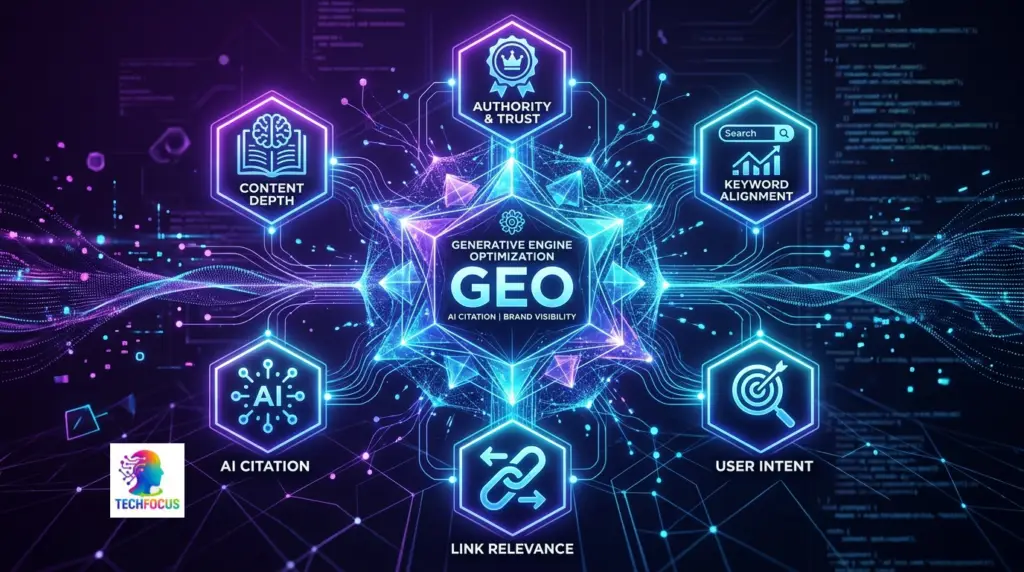
Generative Engine Optimisation: 6 Smart Tactics to Get Your Brand Cited by AI Search
Generative Engine Optimisation (GEO) is the next evolution in digital marketing strategy. As AI-powered search engines like Google’s AI Overviews, Perplexity, and Bing Copilot generate answers rather than list links, brands must fundamentally adapt their content approach.
GEO services are specifically focused on making your content the source that generative AI systems cite, summarise, and recommend. If you are not visible in AI-generated answers, you are not visible to a fast-growing segment of your audience.
Understanding Generative Engine Optimisation
Generative engines are AI systems that create original responses to user queries by synthesising information from across the web. Unlike traditional search engines that surface a list of links, generative engines produce a single, unified answer, and they choose which sources to cite.
Generative Engine Optimisation is the practice of ensuring your content consistently makes it into that cited source list. It requires a different approach than traditional SEO, focused on content clarity, authority signals, and AI-friendly formatting.
Why GEO Is Now a Business-Critical Priority
Research shows that users trust AI-generated answers significantly more than individual search results. When an AI tool summarises a topic and cites your brand as the source, it delivers a powerful credibility signal that no paid ad can replicate. Generative Engine Optimisation turns this emerging behaviour into a strategic advantage.
The Business Cost of Ignoring GEO
- Lost brand authority as AI tools recommend competitors in your niche
- Reduced organic traffic as generative answers replace traditional clicks
- Missed opportunity to build AI-driven credibility at zero marginal cost
- Increasing difficulty entering the conversation as competitors build citation history
Our Proven Generative Engine Optimisation Framework
Phase 1: GEO Readiness Assessment
Before we optimise, we measure. Our GEO readiness assessment analyses your current AI citation footprint, tracking how often, where, and in what context AI systems currently reference your brand. We benchmark this against competitors to prioritise the highest-impact opportunities.
Phase 2: Content Architecture for AI Citation
Generative engines prefer content that is specific, authoritative, and well-structured. We transform your content architecture using clear headings, concise paragraphs, data-backed claims, and expert attribution, all factors that make AI systems trust and cite your content.
Phase 3: Source Authority Development
AI citation is heavily influenced by your brand’s overall authority footprint. We build this through strategic PR mentions, academic and industry citations, Wikipedia-adjacent content, and data-driven original research that generative engines gravitate toward as primary sources.
Phase 4: Continuous Citation Monitoring
GEO success requires ongoing measurement. We track your brand’s appearance in AI-generated results across multiple platforms, measuring citation frequency, query coverage, and sentiment to guide continuous improvement.
6 Smart GEO Tactics That Actually Work
1. Original Data and Research Publication
AI systems are trained to prefer primary sources. When you publish original surveys, industry reports, or proprietary data, you become a citable primary source, one that generative engines will reference repeatedly across many related queries.
2. Definitive Guide Content Creation
Comprehensive, authoritative guides that cover a topic exhaustively are magnets for AI citation. We create definitive content pieces, 3,000 to 8,000 words, that establish your brand as the go-to resource for specific topics in your industry.
3. Clear Statistical and Factual Anchoring
Generative engines cite content with specific, verifiable facts far more than vague claims. We infuse your content with concrete statistics, percentages, named methodologies, and measurable outcomes that give AI systems solid, citable data points.
4. Expert Attribution and Authorship
AI systems favour content attributed to real, verifiable experts. We develop detailed author profiles for your content creators, build their online presence across LinkedIn and industry publications, and ensure every piece of GEO-targeted content carries credible expert authorship.
5. Cross-Platform Content Distribution
The more places your content appears Medium, LinkedIn, industry publications, podcast transcripts, YouTube descriptions the higher the probability that generative engines encounter and index it as a reliable source. We build strategic distribution plans to maximise your content’s reach.
6. Structured Definition and Glossary Content
Generative engines frequently cite definition-style content when answering ‘what is’ questions. We develop comprehensive glossary pages and definition blocks for every key term in your niche, positioning your brand as the authoritative definer in your space.
GEO vs. SEO vs. AEO: Understanding the Difference
What Each Discipline Targets
- Traditional SEO: Rankings in link-based search result pages
- AEO (Answer Engine Optimisation): Featured snippets and direct answers in search
- GEO (Generative Engine Optimisation): Citations within AI-generated responses
All three are complementary. Our integrated approach ensures you win across all three layers of modern search visibility, maximising your total share of digital attention.
Conclusion
Generative Engine Optimisation is not a trend; it is the new foundation of digital visibility. As generative AI search becomes the dominant way people find information, the brands that invest in GEO today will own tomorrow’s search landscape.
Our GEO specialists are ready to assess your current AI footprint and build a targeted strategy to make your brand the source that AI search engines trust, cite, and recommend.