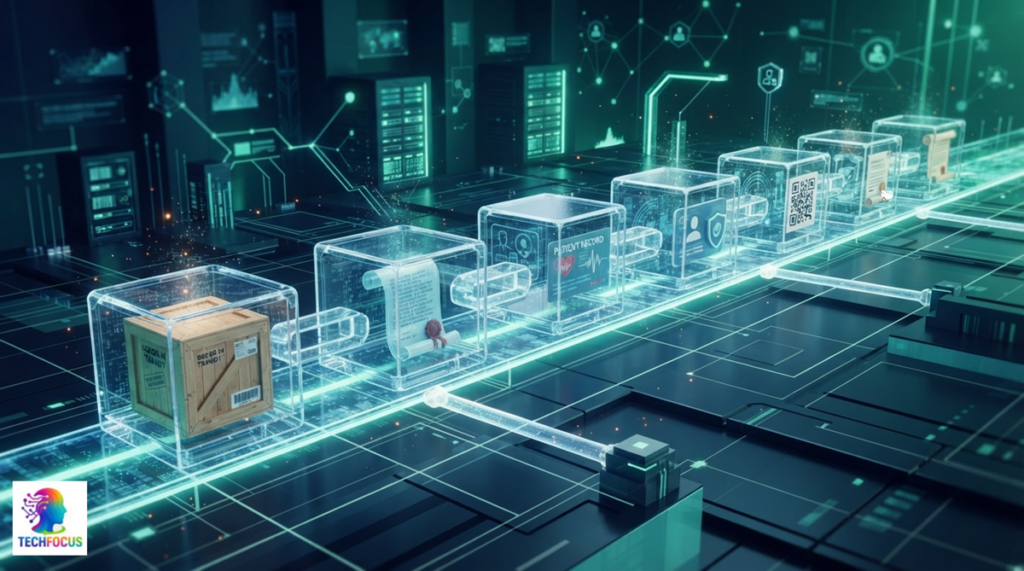
Blockchain business use cases extend considerably further than the cryptocurrency speculation most people immediately associate with the technology, into genuinely practical applications solving real operational problems across several different industries. This guide covers blockchain business use cases honestly, focusing on where the technology is delivering genuine, measurable value today.
Why Does Blockchain Get Reduced to Just Cryptocurrency in Most People’s Minds?
Cryptocurrency was blockchain’s most visible, widely publicised early application, generating enormous public attention and speculative trading activity. This early prominence has understandably overshadowed the technology’s genuinely broader potential for many people who haven’t looked much further past that initial association.
What Makes Blockchain Genuinely Useful Beyond Currency?
At its core, blockchain provides a tamper-resistant, shared record of information that multiple parties can trust without needing a single central authority to manage and verify it. This specific property has genuine value in situations well beyond simply tracking currency transactions.
Use Case #1: Supply Chain Transparency
Blockchain can create a verifiable, permanent record of a product’s journey from origin through every step to final sale, letting businesses and customers verify authenticity and origin claims with confidence that’s genuinely difficult to fake or manipulate after the fact.
Use Case #2: Verifying Authenticity of Goods
Luxury goods, pharmaceuticals, and other products vulnerable to counterfeiting can use blockchain to provide verifiable proof of authenticity, addressing a genuinely costly problem that traditional paper documentation struggles to solve reliably at scale.
Use Case #3: Streamlining Cross-Border Payments
Blockchain-based systems can potentially reduce the time and cost of international business payments compared to traditional banking intermediary systems, particularly for genuinely underserved regions with less developed banking infrastructure.
Use Case #4: Secure Record-Keeping for Sensitive Documents
Blockchain’s tamper-resistant properties make it useful for maintaining sensitive records such as property titles, certifications, and credentials where genuine verification and resistance to fraudulent alteration matter considerably.
Use Case #5: Smart Contract Automation
Beyond simple record-keeping, blockchain enables smart contracts that automatically execute specific actions when predetermined conditions are met, genuinely streamlining processes like automated payments or conditional agreements without manual intermediary involvement.
Use Case #6: Voting and Governance Systems
Some organisations use blockchain for internal voting and governance processes, leveraging its tamper-resistant properties to create genuinely verifiable, auditable records of decisions and votes that participants can trust.
Use Case #7: Business Process Automation With Smart Contracts
Businesses can use blockchain-based smart contracts to automate agreements, approvals, payments, and other processes when predefined conditions are met. This can reduce manual administration and delays in situations where multiple parties need a transparent and verifiable way to execute agreed actions.
Does Blockchain Adoption Require Replacing Existing Systems Entirely?
Not necessarily. Many businesses integrate blockchain for a specific function- verification and cross-party record-keeping while continuing to use existing systems for everything else, rather than undertaking a complete technology overhaul just to capture a specific, narrow benefit.
Which Industries Are Seeing the Most Genuine Blockchain Adoption?
Supply chain-heavy industries like food and pharmaceuticals, financial services dealing with cross-border transactions, and industries handling valuable, authentication-sensitive goods tend to show the most genuine, practical blockchain business use cases beyond pure speculation.
Does Adopting Blockchain Require Understanding Cryptocurrency?
Not necessarily. Many genuine blockchain business use cases operate entirely separately from cryptocurrency trading or speculation, using the underlying technology purely for its record-keeping and verification properties rather than as a currency or investment vehicle.
Does Blockchain Genuinely Reduce Costs, or Just Shift Them?
It depends on the specific use case. In situations with genuine multi-party friction and manual verification overhead, blockchain can meaningfully reduce overall costs. In simpler situations without that genuine complexity, the cost of implementation and maintenance can sometimes exceed the value it actually provides.
What Are the Genuine Challenges of Adopting Blockchain for Business?
Implementation complexity, the need for genuine buy-in from multiple parties in a shared system, and the technology’s still-maturing tooling and talent pool represent real, practical challenges that businesses should honestly weigh against the specific benefits for their particular use case.
Should a Business Wait for the Technology to Mature Further?
For non-urgent, exploratory use cases, waiting for more mature tooling, clearer regulation, and a larger pool of experienced developers is often a genuinely reasonable choice, rather than rushing into an implementation before the surrounding ecosystem has caught up sufficiently.
Is Blockchain Overkill for Most Small Businesses?
Often yes, honestly. Many small businesses don’t have the specific multi-party verification or supply chain complexity that makes blockchain genuinely valuable, meaning simpler, more established technology solutions frequently address their actual needs more efficiently and affordably.
How Do You Know If Your Business Has a Genuine Blockchain Use Case?
Look for situations involving multiple parties who don’t fully trust each other but need to share and verify information reliably, where the specific tamper-resistant, decentralised properties blockchain offers provide genuine value beyond what a simpler, more traditional database could accomplish.
Final Answer: Where Blockchain Genuinely Adds Value
Blockchain business use cases genuinely worth pursuing typically involve multi-party trust, verification, or transparency needs that traditional systems handle poorly, rather than technology adoption purely for its own sake. Evaluating your specific situation honestly against this criterion helps separate genuine opportunity from unnecessary complexity that adds cost without adding real value.
Frequently Asked Questions
Is blockchain only useful for cryptocurrency?
No, genuine blockchain business use cases extend into supply chain transparency, authenticity verification, secure record-keeping, and smart contract automation well beyond currency.
Which industries benefit most from blockchain adoption?
Supply chain-heavy industries, financial services handling cross-border payments, and industries requiring authentication verification tend to show the most genuine practical adoption.
Do small businesses need blockchain technology?
Often not, honestly. Many small businesses lack the multi-party verification complexity that makes blockchain genuinely valuable compared to simpler existing solutions.
Does using blockchain for business require cryptocurrency knowledge?
Not necessarily. Many genuine business use cases operate entirely separately from cryptocurrency trading, using blockchain purely for its record-keeping properties.
How do you know if your business has a genuine blockchain use case?
Look for situations involving multiple parties needing to share and verify information reliably without full mutual trust, where blockchain’s specific properties add real, measurable value over time.