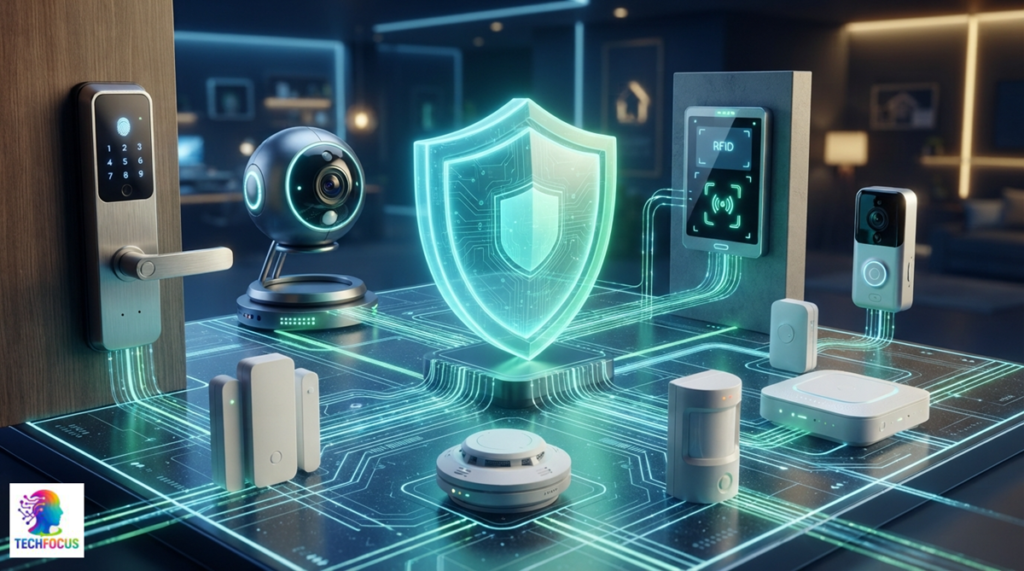
IoT security devices have genuinely transformed how homes and offices approach physical security, moving well beyond traditional locks and basic alarm systems into connected, intelligent monitoring that most people simply didn’t have realistic access to a decade ago. This guide covers IoT security devices honestly, looking at what’s genuinely improved and what still deserves careful, informed consideration.
What Are These Devices, in Plain Terms?
They are internet-connected physical security tools: cameras, door locks, motion sensors, and alarm systems that can be monitored and controlled remotely, often sending real-time alerts directly to a smartphone rather than requiring someone to be physically present to notice a problem.
How Are They Changing Home Security?
Remote Monitoring From Anywhere
Homeowners can now check live camera feeds and receive genuine real-time alerts from anywhere with an internet connection, rather than relying entirely on being physically present or waiting to discover a problem after the fact.
Smarter, More Targeted Alerts
Modern connected systems can distinguish between genuinely different types of activity, such as a package delivery versus a person lingering suspiciously, reducing the constant false alarms that plagued many earlier-generation security systems.
Keyless, Trackable Access Control
Smart locks let homeowners grant temporary, trackable access to specific people, and remotely revoke that access instantly, without needing to physically rekey anything or hand out duplicate physical keys.
How Are They Changing Office Security?
Centralised Multi-Location Monitoring
Businesses with multiple locations can monitor all of them from a single centralised system, rather than needing separate, disconnected security setups for each physical site.
Detailed Access Logs
Connected access control systems create detailed digital logs of exactly who entered specific areas and precisely when, providing genuinely valuable security information and accountability that traditional physical keys simply couldn’t offer.
Integration With Other Business Systems
These tools can often integrate with other business systems, automatically adjusting building access based on employee schedules or triggering specific alerts when unusual, unexpected activity happens outside normal business hours.
What Are the Genuine Benefits?
Real-time awareness, remote access and control, detailed activity logs, and smarter alert systems all represent genuine, practical improvements over traditional, purely physical security measures that couldn’t offer anything close to this level of visibility or convenient control.
What Are the Genuine Risks of IoT Security Devices?
The Devices Themselves Can Be Hacked
Poorly secured connected tools can potentially be compromised, ironically turning a security device into a genuine vulnerability if not properly configured and maintained with appropriate ongoing care.
Data Privacy Considerations
Security cameras and sensors collect data, sometimes including sensitive footage, that requires careful handling and appropriate storage security practices to avoid becoming a genuine privacy problem down the line.
Dependence on Internet and Power
These systems generally require reliable internet and power to function properly, meaning an outage of either can genuinely compromise effectiveness precisely when protection might be needed most.
How Can You Choose and Secure Them Safely?
Choose reputable manufacturers with a genuine track record of regular security updates, change default passwords immediately upon setup, enable two-factor authentication where available, and keep device firmware updated to help close known vulnerabilities as they’re discovered and patched.
Are They Worth It for a Small Business?
Often, yes, particularly for businesses wanting remote visibility into their premises without hiring dedicated on-site security staff. The relative affordability of modern IoT security devices has made this level of monitoring accessible to businesses that couldn’t have justified the cost of comparable systems in the past.
Do They Replace Traditional Security Measures Entirely?
Not necessarily entirely. Many effective security setups combine connected tools with traditional measures, such as solid physical locks and adequate lighting, rather than relying purely on connected technology alone, creating meaningful, complementary layers of protection.
Does Insurance Ever Factor Into This Decision?
Sometimes, yes. Certain insurance providers offer discounts for homes or businesses with monitored security systems in place, since documented monitoring and faster incident response can genuinely reduce claim severity and frequency, making this a worthwhile detail to check with your specific provider.
Does the Type of Property Affect Which Devices Make Sense?
Yes, genuinely. A small apartment has very different security needs than a multi-location retail business, meaning the specific combination of cameras, sensors, and access control worth investing in should match the actual physical layout and risk profile of the property in question. A landlord managing several rental units, for instance, might prioritise remote access logs and tenant-specific entry codes, while a single-family homeowner might prioritise simple camera coverage and a reliable alarm connection instead.
Final Answer: Are They Genuinely Worth Adopting?
IoT security devices offer genuine, meaningful improvements in visibility, convenience, and control for both homes and offices, provided they’re chosen and configured thoughtfully with real attention to security best practices. Approaching adoption informed about both the genuine benefits and real risks leads to a security setup that’s actually more secure, not less, over the long run.
Frequently Asked Questions
Are IoT security devices actually more secure than traditional systems?
They can offer genuine improvements in monitoring and control, though poorly secured devices can themselves become vulnerabilities if not properly configured and maintained.
Do these connected security tools require professional installation?
Many are designed for straightforward self-installation, though some more complex or comprehensive systems may genuinely benefit from professional setup for optimal reliability.
What happens to connected security systems during an internet outage?
Most require internet connectivity to function fully, meaning an outage can genuinely compromise remote monitoring and alert capabilities during that specific period.
Are IoT security devices worth the cost for a small business?
Often yes, particularly for remote visibility without dedicated on-site security staff, given how affordable these tools have genuinely become in recent years.
Should connected devices replace traditional locks entirely?
Not necessarily. Combining connected devices with traditional physical security measures typically creates a more genuinely robust, layered approach than relying on either alone.