
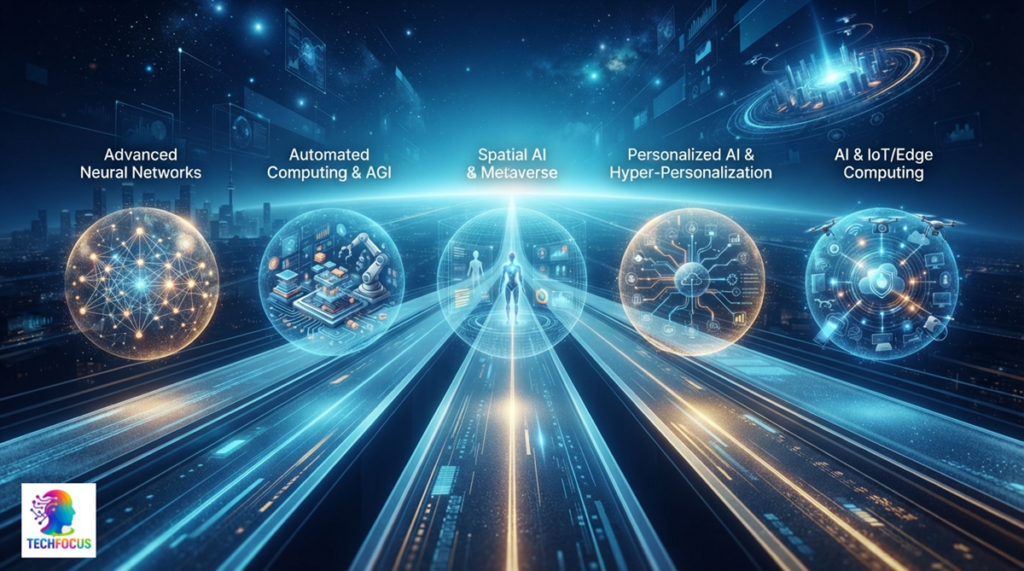
The future of artificial intelligence is predicted constantly, often with more hype than substance. This guide skips the exaggerated headlines and focuses on five trends that are already visibly shaping the future of artificial intelligence, based on what’s actually happening in the industry right now rather than speculative guesswork.
Why Is It Worth Paying Attention to Where AI Is Headed?
Because the direction AI takes over the next couple of years will shape which business tools are worth adopting now, which skills are worth building, and which changes are worth preparing for early rather than reacting to later. Understanding real trends, not just hype, helps separate genuinely useful preparation from chasing every new headline.
Trend #1: AI Agents That Complete Multi-Step Tasks
Rather than answering a single question, newer AI systems are increasingly built to handle entire multi-step tasks on their own, researching a topic, drafting a document, checking it against requirements, and revising it, all with minimal step-by-step direction from a person. This shift from “answering questions” to “completing tasks” is one of the clearest directions the technology is moving.
Trend #2: Tighter Integration Into Everyday Software
AI capability is increasingly built directly into the tools people already use- email clients, spreadsheets, design software, and project management platforms- rather than existing as a separate destination people have to visit. This makes AI assistance feel like a natural part of existing workflows instead of an extra step.
Trend #3: More Regulation and Formal Oversight
As AI tools take on bigger roles in hiring, lending, healthcare, and other high-stakes decisions, governments and regulators are responding with more formal rules around transparency, data use, and accountability. Businesses adopting AI tools are increasingly expected to document how those tools make decisions, not just that they work.
Trend #4: Smaller, More Specialised Models
Alongside massive general-purpose systems, there’s a growing trend toward smaller, more efficient models built for specific tasks, running faster, costing less, and sometimes performing better on narrow jobs than a giant general-purpose model would. This matters especially for businesses that don’t need a system capable of everything, just one that’s excellent at their specific use case.
Trend #5: A Growing Emphasis on Verifying AI Output
As more people encounter confidently wrong AI answers, there’s a growing trend toward tools and habits built around checking AI output rather than trusting it blindly; fact-checking features, source citations, and built-in review steps are becoming standard expectations rather than nice-to-haves.
How Fast Is All This Actually Happening?
Unevenly. Some of these trends, like tighter software integration, are already visible in tools many people use daily. Others, like comprehensive regulation, move more slowly and vary significantly by region and industry. The honest picture of the future of artificial intelligence isn’t one smooth wave of change; it’s several trends moving at different speeds, some further along than others.
What Does This Mean for Businesses Right Now?
Rather than trying to adopt every emerging trend at once, it’s more practical to focus on what’s directly relevant to your business today. A company relying heavily on customer data should pay close attention to the regulation trend. A team looking to save time on repetitive multi-step work should watch the AI agents trend closely. Picking the one or two trends most relevant to your actual operations, rather than reacting to every headline, tends to produce better results.
What Does This Mean for Individual Careers?
The trends point toward a growing need for people who can direct, review, and work alongside AI systems effectively, not just people who can operate a single specific tool. Skills like clearly defining tasks for an AI system, critically evaluating its output, and understanding where it tends to go wrong are likely to remain valuable regardless of which specific tools rise or fall in popularity.
What Trends Are Overhyped Right Now?
Not every prediction about the future of artificial intelligence holds up under scrutiny. Claims of fully autonomous general intelligence arriving imminently, or entire industries disappearing overnight, tend to be far more speculative than the five grounded trends above, which are already visible in real products today rather than existing only as a distant forecast.
Are These Predictions Guaranteed to Happen Exactly This Way?
No prediction about technology is ever guaranteed, and it’s worth staying appropriately sceptical of anyone claiming total certainty about the future of artificial intelligence. What makes these five trends different from pure speculation is that each one is already visibly underway in real products and policies today; this is a description of current momentum, not a guess about a distant, uncertain future.
Final Answer: What Should You Actually Do With This Information?
Rather than trying to predict every twist the future of artificial intelligence might take, focus on staying reasonably informed, adopting tools that solve real problems you already have, and building the habit of reviewing AI output critically. That combination holds up well regardless of exactly how quickly each of these five trends unfolds.
Frequently Asked Questions
What is the biggest trend shaping the future of artificial intelligence right now?
AI systems that can complete multi-step tasks independently, rather than just answering single questions, are among the most significant current shifts.
Will AI regulation slow down innovation?
It may slow certain deployments, but it’s also intended to build more trust and accountability, which many businesses see as a reasonable trade-off.
Are smaller AI models actually better than large ones?
For specific, narrow tasks, smaller specialised models can be faster, cheaper, and sometimes more accurate than large general-purpose systems.
How can a business prepare for future AI trends without overspending?
Focusing on the one or two trends most relevant to your specific operations, rather than adopting every new tool, is usually the most cost-effective approach.
Is it possible to predict AI’s future with full certainty?
No. These trends are based on visible current momentum, but exact timelines and outcomes remain genuinely uncertain.